
Tag: step-up in basis

  • Life Estate Deed: Keeping the House While Passing It On

    Life Estate Deed: Keeping the House While Passing It On

    A widow signed a life estate deed on her farmhouse, naming her son as the remainderman, believing she’d found a simple way to guarantee the house would skip probate and pass to him without complication. Years later, she wanted to refinance to cover a medical expense. She couldn’t — not without her son’s signature, because the moment she signed that deed, part of the house had already legally become his. She’d solved the probate problem and, without fully realizing it, had also given away a portion of her own decision-making power over her own home, effective immediately rather than at her death.

    A single asset split into two legal interests

    A life estate deed divides ownership of real property into two distinct legal interests at the moment it’s signed: a life estate, held by the current owner (the “life tenant”), giving them the right to live in and use the property for the rest of their life; and a remainder interest, held by a named beneficiary (the “remainderman”), who automatically becomes the full owner the instant the life tenant dies — no probate required for that transfer, because ownership was already split and waiting to consolidate.¹ This is what makes a life estate deed attractive for probate avoidance: the remainderman’s ownership isn’t something that has to be established after death through a will or court process. It already exists, has existed since the deed was signed, and simply becomes complete at the life tenant’s death.

    The part that surprises people who assumed “my house” still meant fully my house

    Because the remainder interest vests immediately upon signing, a standard life estate deed meaningfully limits what the life tenant can do with the property going forward. Selling the property outright generally requires the remainderman’s consent and signature, since the remainderman now legally owns a real, present interest in it — not a future hope, but an actual property right today. Mortgaging or refinancing the property typically carries the same requirement. And a life tenant generally cannot unilaterally change their mind and name a different remainderman later; the remainder interest, once vested, belongs to the person named, not to the life tenant’s ongoing discretion.

    The tax benefit that survives all of these restrictions

    Despite these limitations, a life estate deed retains a significant tax advantage: under Internal Revenue Code Section 1014, property that passes to a beneficiary at death — rather than being gifted outright during the owner’s lifetime — generally receives a “step-up in basis” to its fair market value as of the date of death.² Because a life estate deed structures the transfer to occur at the life tenant’s death rather than as a completed lifetime gift, the remainderman typically receives this same step-up in basis treatment, potentially eliminating a substantial capital gains tax liability if they later sell the property, compared to what they’d owe had the property simply been gifted to them outright years earlier at its original, lower purchase price.

    Where this shows up in Medicaid planning, and its real limits there

    A life estate deed can also be used in Medicaid planning, since transferring the remainder interest removes it from the life tenant’s countable assets for Medicaid eligibility purposes, provided the transfer happens outside Medicaid’s five-year lookback period. But the protection has a real gap: because the life tenant retains a genuine, valuable interest in the property (the right to live there for life), Medicaid’s estate recovery program in many states can still place a claim against the value of that retained life estate interest after the life tenant’s death — meaning a standard life estate deed doesn’t necessarily provide the complete estate recovery protection some families assume it does.³ This is precisely the gap that an enhanced life estate deed (a “Lady Bird” deed, available in only five states) is specifically designed to close, by allowing the life tenant to retain full control — including the ability to sell or revoke without the remainderman’s consent — while still achieving Medicaid estate recovery protection in states that recognize it.

    The tradeoff, stated plainly

    A standard life estate deed is a fixed, permanent decision made at signing: probate avoidance and a locked-in beneficiary, in exchange for giving up unilateral control over selling, mortgaging, or changing your mind about the property afterward. It’s a reasonable tool for someone entirely certain about who should inherit a specific piece of property and unlikely to need to sell, refinance, or reconsider that decision later in life. It’s a poor fit for anyone who values flexibility, anticipates needing to tap the property’s equity, or simply isn’t certain enough yet to make an irreversible decision about who gets it — for that person, the enhanced life estate deed, where available, or a revocable living trust, generally serves the same probate-avoidance goal without permanently surrendering control in the meantime.

    Sources

    1. General life estate property law doctrine — division of real property into a present life estate interest and a future remainder interest, with the remainder vesting automatically at the life tenant’s death without probate.

    2. 26 U.S. Code § 1014 (Basis of property acquired from a decedent) — step-up in basis to fair market value as of the date of death for property passing at death, including property passing via a life estate deed’s remainder interest.

    3. Medicaid Estate Recovery Program, 42 U.S.C. § 1396p(b) — states may recover the value of a Medicaid recipient’s retained life estate interest from the estate after death, depending on the state’s specific estate recovery scope.

    This article is for educational purposes only and does not constitute legal, tax, or financial advice. Life estate deed rules, Medicaid estate recovery scope, and step-up in basis treatment vary by state and by individual circumstances. Consult a licensed estate attorney before executing a life estate deed.
  • Transfer on Death Deeds: The Simplest Way to Pass Down a House

    Transfer on Death Deeds: The Simplest Way to Pass Down a House

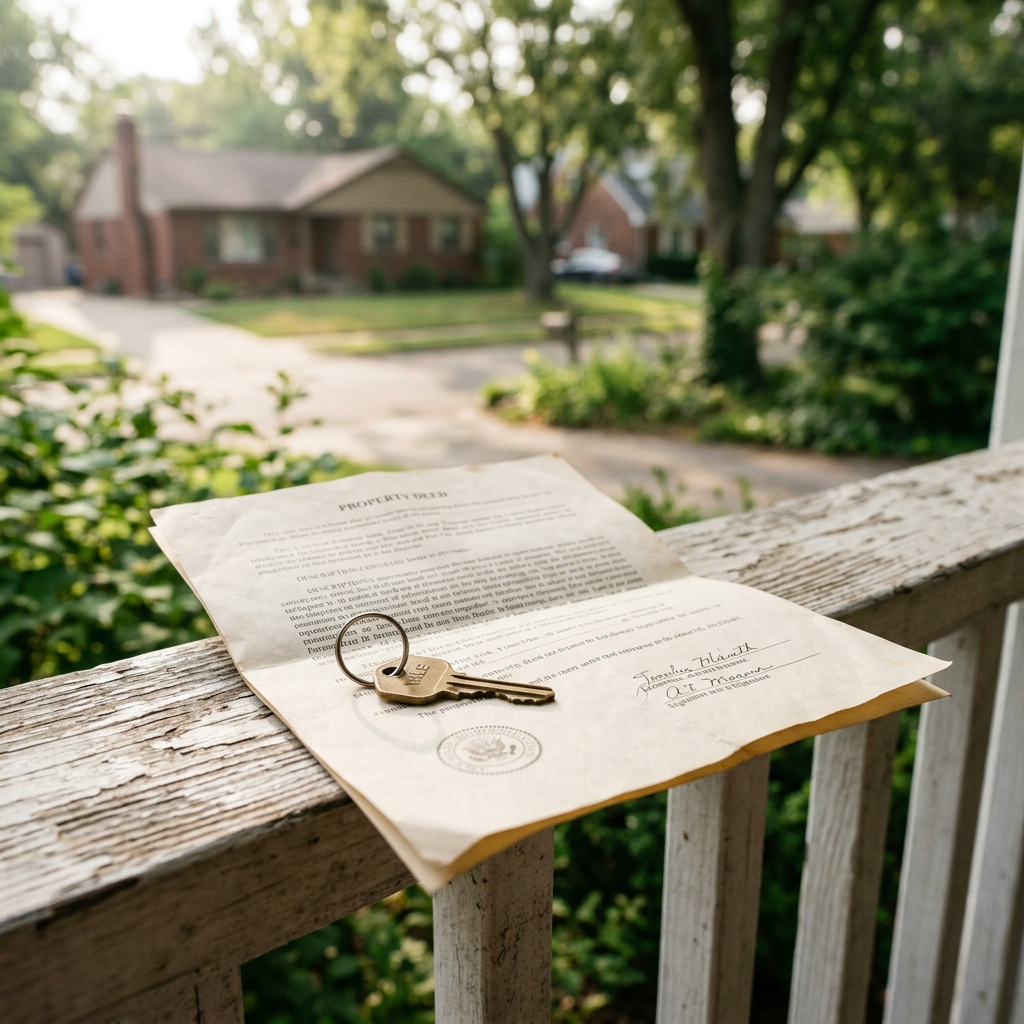
    A transfer on death deed does something that sounds almost too simple to be legal: you sign one piece of paper, file it with the county, and the house that used to require a probate proceeding to change hands now just… changes hands. No trust, no funding process, no attorney drafting fees for a full estate plan. It reads like a loophole. It isn’t one — it’s a deliberately built shortcut, available in a specific and shorter list of states than most people assume.

    How it actually works

    A transfer on death deed (sometimes called a TOD deed, or a TODD in Texas) is a real estate deed you record now, while you’re alive, naming a beneficiary who receives the property automatically at your death — with no probate required for that asset. The mechanism comes from the Uniform Real Property Transfer on Death Act, which as of the most recent count has been adopted in some form by roughly half the states.¹ That’s a meaningfully different number than “most states,” and it’s the first thing to check before assuming this tool is available to you at all.

    The deed carries three features that make it unusually forgiving compared to other estate planning tools. It’s fully revocable — you can cancel or change the beneficiary at any time before death, no permission needed, and Texas law states plainly that the deed remains revocable even if the deed itself claims otherwise.² It’s nontestamentary, meaning it isn’t treated as part of your will and doesn’t need to satisfy will-execution formalities. And it does nothing during your lifetime: the deed grants your named beneficiary no present interest, no right to move in, no ability to force a sale, no claim on the property at all until you die. You keep complete control until the day you don’t need it anymore.

    The tax benefit riding along with it

    Because a TOD deed transfers no interest until death, the property still gets a full step-up in cost basis to fair market value at the date of death — the same tax treatment an inheritance through a will or trust receives.³ That matters more than it sounds: if your beneficiary sells the house shortly after inheriting it, they generally owe capital gains tax only on appreciation after your death, not on decades of appreciation that happened while you owned it. This is one of the few places where the simplest tool available also happens to be the tax-optimal one — you don’t sacrifice a benefit by choosing the shortcut.

    Where the shortcut runs out

    Here’s the assumption worth correcting before it costs somebody: “avoids probate” is not the same as “avoids every claim on the property.” Medicaid estate recovery is the clearest example. States that received long-term care Medicaid benefits on your behalf are required to seek reimbursement from your estate after death — and while some states only pursue “probate estate” assets, other states have expanded their definition of “estate” for recovery purposes specifically to reach non-probate transfers, TOD deeds included.⁴ Whether a TOD deed shields a house from Medicaid recovery depends entirely on which kind of state you’re in, and that’s a question a TOD deed alone cannot answer for you.

    The deed also doesn’t solve incapacity planning. It only takes effect at death — if you become unable to manage your affairs while alive, a TOD deed on file does nothing, the same blind spot a will has. And it doesn’t handle a beneficiary who dies before you, or multiple beneficiaries who can’t agree on what to do with a house they now co-own outright with no instructions for managing it together.

    How it compares to the other tools in this toolbox

    A TOD deed does roughly the same job as a Lady Bird deed (also called an enhanced life estate deed), but through a different legal structure, and the two aren’t interchangeable everywhere — Lady Bird deeds are recognized in only a handful of states, largely a separate list from the URPTODA states. A revocable living trust accomplishes the same probate avoidance for real estate, plus a great deal more (incapacity planning, coordination across many asset types, privacy for your entire estate rather than one property) — but it requires actually funding the trust, which is a step people skip. The honest comparison isn’t “which is best” — it’s which gap you’re actually trying to close. If the only goal is getting one house to one or two people without a courtroom in the middle, a TOD deed does that job with less paperwork than anything else on the list. If the goal is broader than one house, it’s the wrong tool for the size of the job.

    Sources

    1. Uniform Real Property Transfer on Death Act (Uniform Law Commission); states adopting a version include Hawaii, Illinois, Nebraska, Nevada, North Dakota, and Oregon, among others — confirm current adoption in your state before relying on this tool.

    2. Texas Estates Code §114.051 (transfer on death deed revocable regardless of contrary provision); §114.055 (deed is nontestamentary).

    3. Texas Law Help, citing Texas Estates Code Chapter 114 — beneficiary receives stepped-up basis at date-of-death value.

    4. Illinois Department of Healthcare and Family Services, Medicaid Estate Recovery FAQs — confirms estate recovery scope tied to probate estate in Illinois; note that other states define “estate” more broadly for recovery purposes to include non-probate transfers. Consult your state Medicaid agency’s estate recovery rules directly.

    This article is for educational purposes only and does not constitute legal, tax, or financial advice. Transfer on death deed availability, requirements, and interaction with Medicaid estate recovery vary significantly by state; consult a licensed estate attorney in your state before relying on one.