Watch This Lesson
For most families, real estate is the single largest probatable asset they own. Financial accounts are easy to coordinate — a payable-on-death or transfer-on-death designation sends them straight past the court. Real estate sits in a different legal world. In many states you cannot simply write a beneficiary’s name on a deed, and without deliberate planning the family home is almost guaranteed to end up in probate.
Real estate is, for most people, your largest probatable asset. We have beneficiary designations on most of our financial accounts, but in some states you cannot list a beneficiary on your real estate.
Renee Parris, Estate Planning, Simplified
The Multi-State Problem
The complexity multiplies if you own property in more than one state. A primary home in one, a cabin or beach condo in another, is an extremely common retirement pattern. Land is bound to the jurisdiction it physically sits in.
If you use the traditional route of a will and probate, every state where you own real estate has to open its own probate, which increases the time, expense, and stress. Why do they do that? Because every state wants their own revenue. They want their own probate fees from your real estate.
Renee Parris, Estate Planning, Simplified
Each state’s court wants its own filing fees, its own local attorney, and runs on its own timeline. Your heirs end up fighting on several fronts at once.
But if you have real estate inside of a revocable living trust, it doesn’t matter. You could have real estate in 20 states, in 15 different counties, it doesn’t matter. It all falls under the umbrella of your revocable living trust.
Renee Parris, Estate Planning, Simplified
Why the Shortcuts Are Fragile
Some states allow transfer-on-death deeds, beneficiary deeds or enhanced life estate deeds, often called Lady Bird deeds. Others rely on joint tenancy with right of survivorship. These can move a property to a named person at death, but they are brittle.
Lady Bird deeds, transfer on death deeds, it only allows you to name a beneficiary. But what if that beneficiary is gone? And you don’t come back and update your documents. And now we have an issue. Sometimes, using a different mechanism affects the taxation on the real estate process. But if you have your real estate under a revocable living trust, it’s very smooth. You dictate in your trust who’s going to get what.
Renee Parris, Estate Planning, Simplified
A trust is dynamic. If a primary beneficiary dies, the contingent provisions take over automatically — closing the gap a static deed leaves open.
How the Retitling Actually Works
The property is moved by deed, with your trust as the grantee.
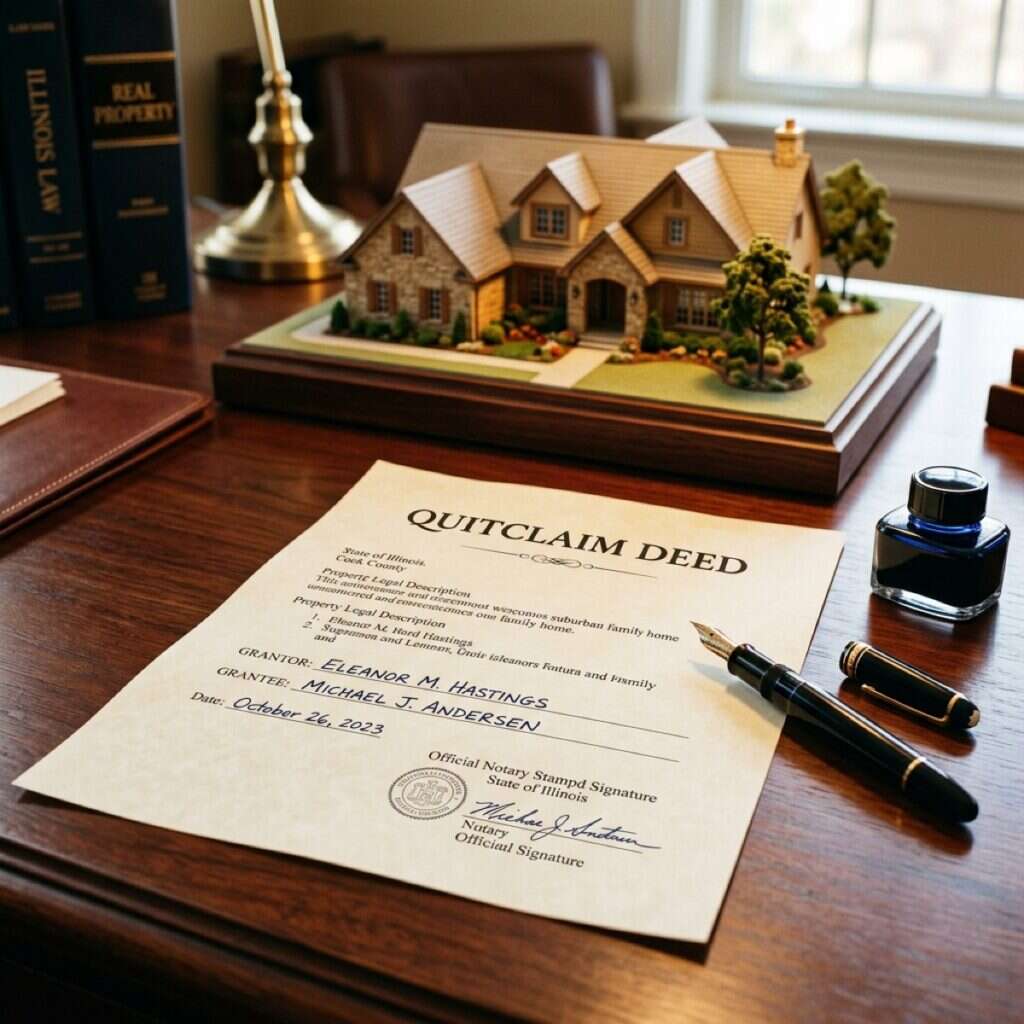
The trust has to own and control your real estate. How do we do that? We retitle your deed to belong to your trust. We do that through a simple process called a quit claim deed. Your house has been in your name, your possession the entire time that you’ve owned it. We know it’s a clean deed because you’re the only one who’s had access to it.
Renee Parris, Estate Planning, Simplified
The grantee must be the trust’s exact legal name including its establishment date, so any future buyer, bank or county clerk can identify the entity holding title.
You Do Not Lose Control, or Your Homestead Exemption
A common fear is that moving a home into a trust triggers a tax reassessment, voids a homestead exemption, or limits your ability to sell.
While you are alive you serve as trustee of your own revocable trust and retain full control. For income tax purposes it is treated as a grantor trust, so everything flows to your personal return. Homestead exemptions generally remain intact because you continue to occupy and control the home. If you sell, you sign as trustee and the proceeds go to the trust.
The Mortgage Question
If you have a mortgage or a home equity line, the lender holds a lien. Historically, mortgages contained due-on-sale clauses that technically allowed a lender to call the loan if an interest in the property transferred. The federal Garn-St. Germain Act largely prohibits lenders from enforcing those clauses when a primary residence moves into a revocable trust, which removes the problem for most homeowners. It is still worth attention for rental, commercial or secondary property.
Parris describes a practical approach some planners use, which is to execute the deed but defer recording it:
We prepare the deed and we show on paper, you get it, you sign it in front of notaries and witnesses showing that it belongs to your trust. But it doesn’t need to get recorded at the courthouse until either the mortgage is paid off or you pass away.
Renee Parris, Estate Planning, Simplified
This is worth discussing carefully with your own attorney rather than treating as a default. Recording rules vary by state, and an unrecorded deed can create its own complications around priority against third parties and title insurance. For a primary residence protected by Garn-St. Germain, the workaround is often unnecessary in the first place.
Property You Co-Own
If you own property with someone outside your household — a sibling, a business partner, a parent — you cannot transfer the whole thing. You can only transfer the share that is actually yours. If five siblings each hold a fifth of a family tract, you deed your undivided one-fifth interest to your trust. That keeps your portion out of probate without affecting the other owners.
For a married couple holding a home jointly, both spouses must sign for the entire property to move into the family trust. If only one signs, only that spouse’s interest transfers, which creates exactly the administrative tangle you were trying to avoid.
One Step People Forget: Insurance
If you record the deed, tell your property and casualty agent. The legal owner of record is now the trust rather than you personally, so the homeowners policy should list the trust as an additional insured. It is a routine update, usually at no extra cost, and it matters: if someone is injured on the property and sues, you want the entity holding title covered by the liability policy.
A Shelter Built on Solid Deeds
Funding a trust with your real estate is what turns a bound document on a shelf into something that actually works. It is not over-engineering. It eliminates multi-state ancillary probate, keeps the transfer private, and leaves a clear path for the next generation — while you keep complete control for as long as you are here.
Sources
- Renee Parris, Estate Planning, Simplified, Module 5, Lesson 3 — course transcript.
- Garn-St. Germain Depository Institutions Act of 1982 — limits on enforcement of due-on-sale clauses for transfers of residential property into revocable trusts.
- Uniform Trust Code — the settlor’s retained powers over a revocable trust.
This article is for educational purposes only and does not constitute legal, tax, or financial advice. Deed recording requirements, homestead exemptions and property tax treatment vary by state and county. Consult a licensed estate planning attorney in your jurisdiction before transferring real estate.
About the instructor: Renee Parris is an estate planning educator with over 30 years of experience. This article is a companion piece to Renee’s course, Estate Planning, Simplified.