
Watch This Lesson
Mention the words “estate plan” in casual conversation, and many people will picture a dusty stack of legal papers tucked away in a safe deposit box, relevant only to the ultra-wealthy. This narrow perspective is one of the greatest barriers to effective planning. An estate plan is not an elite privilege, nor is it merely a bundle of paper. It is something far more dynamic: a coordinated system of choices and authority.
Estate planning educator Renee Parris breaks through the legal jargon to define what an estate plan actually is in terms anyone can understand — specifically, how a well-structured plan functions as a completed package of clarity and order left behind for the people you care about most.
The Anatomy of a Plan: Documents and Decisions
In simple terms, it’s a combination of documents, a combination of decisions. That when put together properly… it’s a package you leave behind that’s all put together. All somebody has to do is pick it up and honor and execute your wishes.
Renee Parris, Estate Planning, Simplified
A document by itself is just ink on paper. A power of attorney form or a trust deed has no power without the underlying decision you made to establish it — decisions about who will raise your minor children, who will run your business if you cannot, and how your life savings will be distributed. Conversely, your decisions have no legal authority unless they are formalized in the correct state-sanctioned documents. It is only when these two elements are combined and properly aligned that you have a functioning plan.
The Rubik’s Cube of Estate Planning
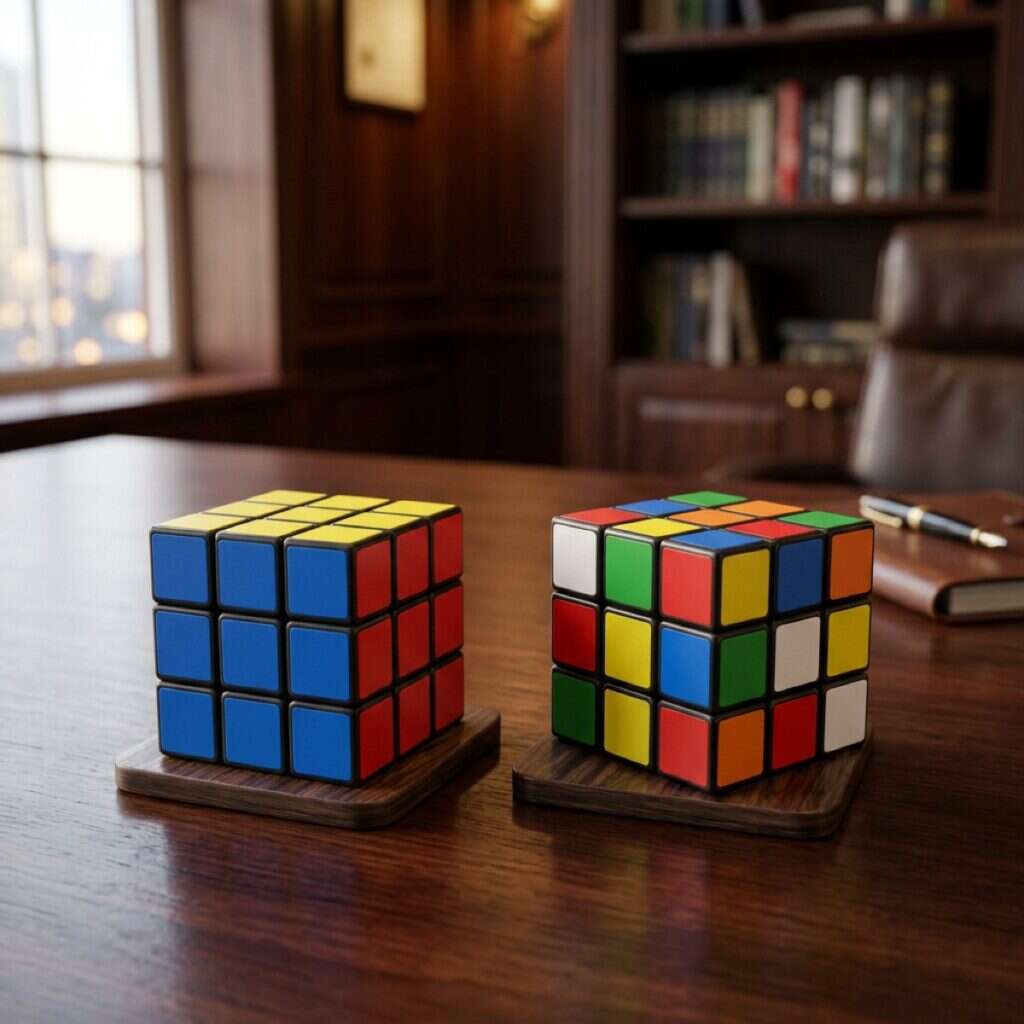
I use the analogy of estate planning looking like that Rubik’s Cube. Not everybody’s looks the same, but when it’s put together well, it’s simple.
Renee Parris, Estate Planning, Simplified
Think of a solved cube, where every colored tile sits perfectly on its designated face. This is the visual representation of a completed, high-quality estate plan. All the elements are aligned — your wills, your trusts, your titled assets, and your beneficiary designations are coordinated. When a crisis occurs, whether sudden incapacity or your eventual passing, your family is not left guessing. They are handed a fully solved, orderly cube. All they have to do is pick it up, hand it to the designated executor or trustee, and execute your wishes as structured.
The Chaos of the Unsolved Cube
Now imagine a jumbled cube, colors scattered at random across every face, with no discernible pattern. This is what happens when you do not have an estate plan, or when your plan consists of uncoordinated, self-drafted pieces.
If you don’t do an estate plan, it’s kind of like a Rubik’s Cube that’s a jumbled up mess. Somebody’s got to figure out what you’re trying to do, what you would have thought, what you would have done, what documents you should have used… it’s a mess.
Renee Parris, Estate Planning, Simplified
When someone passes away or becomes incapacitated without a coordinated plan, their family is forced to solve that jumbled cube blind. They must navigate the public, expensive probate process, locate scattered assets, and guess at what the deceased would have wanted. This administrative and emotional chaos frequently leads to family disputes, unnecessary legal expenses, and lengthy delays. Instead of grieving peacefully, your family is left sorting through a legal and financial mess.
A Plan for Life, Not Just Death
A common misconception is that estate planning is solely about what happens after you die. In reality, a significant portion of a modern plan is designed to operate while you are still alive. If a medical emergency leaves you unable to speak for yourself, your estate plan provides the precise mechanism for who makes your medical and financial decisions, keeping control in your hands rather than the state’s.
A complete plan also governs the transfer of every category of asset you own: titled assets like real estate deeds and vehicle titles, non-titled assets like personal property and household contents, and financial accounts. As Parris puts it, “whether you have a title to it, a deed to it, or it’s just assumed ownership because it’s in your home… all of that needs to get transferred through a set of documents and a series of decisions.”
Leaving Order Behind
Ultimately, creating an estate plan is an act of stewardship. It is about taking the time today to arrange the facets of your life so that your heirs are spared the burden of solving a chaotic puzzle tomorrow. By working with a specialized attorney to coordinate your documents and your decisions, you ensure that your cube is fully solved, neat, and ready to be executed exactly as you intended.
About the instructor: Renee Parris is an estate planning educator with over 30 years of experience. This article is a companion piece to Renee’s course, Estate Planning, Simplified.
Sources
- Restatement (Third) of Trusts and the Uniform Probate Code — for legal definitions and statutory frameworks covering trusts, wills, and estate administration.
This article is for educational purposes only and does not constitute legal, tax, or financial advice. Estate planning is complex and state-specific; always consult a licensed estate planning attorney in your jurisdiction to design a plan that matches your specific circumstances.