

Watch This Lesson
Married couples tend to assume the marriage itself is the plan. One of us dies, everything goes to the other, nobody goes to court, the kids get it eventually. Renee Parris opens this lesson by declining to confirm any of that:
You are currently married. How should you factor that into your estate planning? Well, the real answer is, and you’re going to love this, it all depends. Don’t you love that? Let’s break it down.
What it depends on is how long you have been married, what each of you brought, and whether there are children from before.
You Are Still Two People
Even in a first marriage where everything was built from nothing, together, the law does not merge you into one owner with one set of wishes.
Each of you still have the ability as individuals to decide what happens to your assets. So even though everything you built was together, most people will say, let’s leave everything to our kids or we’ll agree to do everything together. But you are still two individual people who can have very different opinions about what happens to your assets.
This usually surfaces in small ways — one spouse wants to give to a church, the other does not; one wants equal shares, the other wants to account for the child who needs more help. Those differences are legitimate, and they are easier to resolve now, in a conversation, than later, through documents that quietly contradict each other.
Second Marriages: Start With the Prenup
When each spouse arrives with assets already accumulated, the plan has to account for where everything came from.
By second marriages, we’ve each already had assets that we’re bringing to the table. Or it might be that one of us has assets and we’re marrying somebody who really doesn’t… Sometimes people will, before it gets to estate planning phase, they will draft or have drafted a prenup agreement, a prenuptial agreement. What does that mean? That means we’re just agreeing that whatever assets we had before we got here to this marriage altar, we’re going to maintain that that was a different world, a different time, a different phase. We’re keeping those assets separate so that if we ever end up in divorce, God forbid… whatever we had before is what it is. But whatever we build together, now we’re going to make a plan for.
If you have a prenuptial agreement, your estate plan has to reference it and track it. A will that disposes of property the prenup already classified as separate creates a direct conflict, and conflicts get resolved in court by people who never met either of you. Give your estate attorney the prenup before they draft anything.
The Mistake That Disinherits People Who Were Raised as Your Children
This is the most consequential paragraph in the lesson.
When we say the legal term for children, okay, if you say, I’m going to leave my estate to my children, what does that mean? According to the law, children means children that are born biologically to you or legally adopted by you. It does not include stepchildren, okay? So, wife has two biological children, husband marries her when those children are young, continues to raise them as their dad. He’s the only dad they’ve ever known, but he never legally adopts them. They’re not legally considered his children in his estate plan. So if they’re not legally adopted or born to you, they don’t count as children.
“My children” means biological or legally adopted. Nothing else. Thirty years of raising someone does not create the legal relationship. If you want a stepchild to inherit, you have to name them by name in the document.
Then there is the mirror-image failure, which is the one that destroys families:
Husband and wife each have children from a first marriage. Husband’s plan leaves everything to his wife, trusting her to pass it along to his children when she dies. He dies. She now owns those assets outright — and she is under no legal obligation to leave any of it to his children. She can leave all of it to her own. Nothing about that is a breach of anything. The plan simply never required it.
This is not usually malice. It is years passing, her own children’s needs becoming the ones in front of her, and a new will drafted without his kids in it. The structure permitted it, so it happened.
The fix is a trust rather than an outright transfer. A QTIP trust is the standard tool: it provides your surviving spouse income for life and security in the home, and it directs the remaining principal to your children when she dies. She gets taken care of. Your children’s inheritance is not left to goodwill.
Why This Gets Ugly: The Grandfather Clock
Renee tells a story about an object nobody wants.
I’m one of seven children. My parents, it was the only marriage they ever had… My dad died a few years ago. My mom lives in a smaller place. She has this grandfather clock that we joke about and talk about all the time. For the space that it’s in, it’s obnoxiously loud. It just chimes too loud. It’s a bulky piece of furniture. Nobody wants the grandfather clock. And so we told mom, like, please don’t give us the grandfather clock in your documents. Right. Every year at Christmas, we have a game we play and we put somebody else’s name on the back of the clock on a sticky note. And we say, OK, if she dies this year, it’s going home with you next year. Tag, you’re it… But the reality is, when our mother dies, what are all of us going to want? We’re going to want that clock because then it won’t sound too loud and then it won’t be a big bulky piece of furniture. Then emotionally, it’s an extension of our mother.
Seven siblings, one clock, zero volunteers — until the day the clock stops being furniture and becomes their mother.
That’s how grief affects people. Psychologically, when assets meet grief, people get what I call wonky, especially children and especially blended families. Because all of a sudden now dad’s gone and yeah, he’s got this wife and she’s great and I like her. But that was my dad and that was my stuff. That’s how people think.
Grief does not respect prior goodwill. The stepmother everyone liked at the wedding becomes the person holding dad’s things. If your plan relies on everybody continuing to behave reasonably, it is relying on the one thing grief reliably removes.
The Tools That Actually Hold
A revocable living trust. Holds joint and separate property during your lives, and on the first death can split into sub-trusts — one providing for the survivor, one locking in the final distribution to children. It also keeps the whole thing out of probate.
A QTIP trust. The blended family answer. Lifetime income for the surviving spouse, remainder to your children, by the terms of your document rather than the survivor’s choice.
Separate plans, where it makes sense. Spouses are not required to have identical documents.
You can say, I want my 50% of the house to be treated this way and her 50% to be treated another way.
Family land, an inherited business interest, a property from a previous marriage — these can be governed differently from what you built together.
Powers of attorney with contingent agents. Both of you need financial and healthcare powers of attorney, and both need a named backup. Spouses travel in the same car. A plan where each of you is the other’s only agent has a single point of failure.
You Will Disagree. Do It Anyway.
I tell my husband all the time, like we’ve been married 40 years, 40 years. And sometimes I joke that it feels like 80… But the reality is at the end of every day, we can barely agree on what we want to eat for dinner, much less how do we want to split our assets? So when you’re married, there is two people involved in every decision. But if you don’t agree, figure out some negotiation, right? That’s what marriage is all about anyway. How do we agree when we disagree? Come to some conclusion and speak to how you want your assets treated depending on who’s going to pass first.
Disagreement is not a reason to postpone. It is the work. The alternative is that the disagreement gets resolved after one of you is gone, by children, in a courtroom.
Your List
- If there is a prenuptial agreement, hand it to your estate attorney before drafting begins.
- If you want a stepchild to inherit, name them. “My children” will not include them.
- If you have children from a prior marriage and your plan leaves everything outright to your spouse, understand that you are relying on trust rather than structure — and ask about a QTIP.
- Name contingent agents on every power of attorney, in case you are both unavailable.
- Sort out the sentimental items specifically. Nobody litigates over the index fund; they litigate over the clock.
This article is for educational purposes only and does not constitute legal, tax, or financial advice. Marital property rules, spousal elective share rights, the legal definition of children, and the tax treatment of marital and QTIP trusts vary by state and change over time. Consult a licensed estate planning attorney in your state, and bring any prenuptial or postnuptial agreement with you.
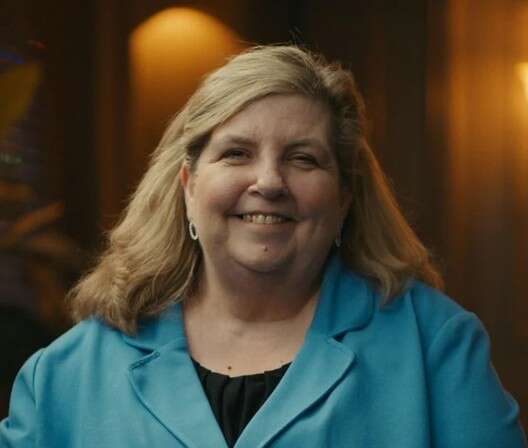
About the instructor: Renee Parris is an estate planning educator with over 30 years of experience. This article is a companion piece to Renee’s course, Estate Planning, Simplified.