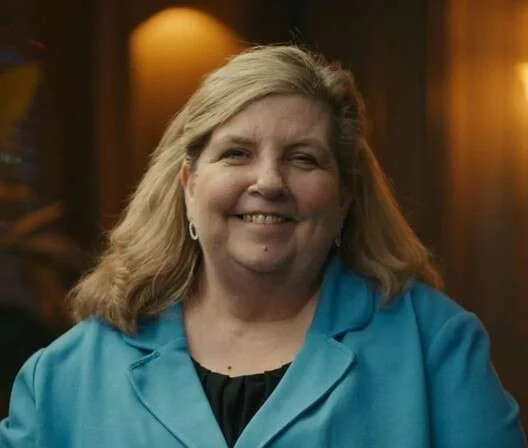
Watch This Lesson
Do you have to change the legal name on every bank account and every household item to your trust? That worry stops a lot of people from finishing the funding step at all. The answer is no — different asset classes use different mechanisms, and most of them do not disrupt your daily life in the slightest.
Personal Property: The Pour-Over Will
The hardest category is the one with no title or deed at all.
Let’s talk about everything else you own, which could be financial accounts or just the stuff in your house, your personal possessions, whether that is jewelry, art, guns, the furniture in your house, the dishes. Like literally we talk about do we need to plan for the forks and knives and spoons? Yes, we do. Everything that you own, there should be a plan for.
Renee Parris, Estate Planning, Simplified
The tool for this is a pour-over will.
How do we fund the trust with things that are just assumed ownership? We do that through a document called a pour over will. It is technically called a last will and testament. But it’s not anything that you specify or customize. It just basically says anything I own, wherever it’s located, whatever it is, goes to my trust. It closes that loophole.
Renee Parris, Estate Planning, Simplified
Once personal property pours into the trust, the trustee has authority to administer it — gathering the family to allocate items, running an estate sale, or donating what is left.
Bank Accounts: Designation, Not Retitling
For checking, savings, money market accounts and CDs, changing the name on the account creates friction you do not need.
Could you go ahead and retitle those accounts to belong to your trust? You can. But there’s really no need to do that because it’s your money to spend. It’s your liquidity. So to get that money to the trust, we use the payable on death designations. It’s just a mechanism that says when we die, bring that money to the trust.
Renee Parris, Estate Planning, Simplified
Whether the money should route through the trust at all depends on your goals.
If you are okay with whoever the beneficiaries are receiving the money right away from the bank, then just let the money go right away by beneficiary designation to those people. If you need that money to come to the trust to be held for spendthrift opportunities, distribution control mechanisms, special needs subtrust, if the money needs to be controlled, then it has to get to the trust or the trustee can’t control it. We don’t mess with the names on the accounts.
Renee Parris, Estate Planning, Simplified
Life Insurance and Annuities
These already pass outside probate through beneficiary designations, so they do not automatically need to involve the trust. Route them through it only when you want the trust’s terms to govern how the money is used.
Let’s say you are married. And on your life insurance products, your spouse is the primary beneficiary. Well, you don’t need the money to come to the trust because the spouse is not a beneficiary of the trust. So you leave the spouse as the primary beneficiary, and then you make the trust the contingent so that if both of you are gone, now the money gets to the trust.
Renee Parris, Estate Planning, Simplified
Retirement Accounts and the Ten-Year Rule
Retirement accounts cannot be retitled into a trust during your lifetime. They are individual contracts.
None of those accounts can be retitled anyway. They must belong to an individual. Your retirement accounts really belong to the plan administrator. You are just a plan participant. So you could never rename your 401K anyway.
Renee Parris, Estate Planning, Simplified
Beneficiary and transfer-on-death designations are the mechanism, and the tax consequences deserve real thought. Under current federal rules, most non-spouse beneficiaries of an inherited IRA must fully draw it down within ten years, which creates an income tax bill somewhere.
If you inherit an IRA right now, you have 10 years to take that out. So you don’t have to liquidate it and pay the taxes day one. You can stretch that tax implication, that pain point, over 10 years. So it might be that you say, I’m going to bring the IRA money to the trust because I don’t want my kids to have to deal with the taxes, or I do want them to deal with it. So you decide, do you want your estate to pay the taxes and then it distributes what’s left? Or do you want it to transfer straight to your beneficiaries, and they deal with the taxes?
Renee Parris, Estate Planning, Simplified
Matching the Tool to the Asset
| Asset type | Retitle in your lifetime? | Mechanism | Main consideration |
|---|---|---|---|
| Personal property — jewelry, furniture, art | No title exists | Pour-over will | Acts as the safety net, routing anything unaccounted for into the trust. |
| Bank accounts | Optional, rarely needed | Payable on death | Keeps day-to-day liquidity simple; passes to the trust only at death. |
| Life insurance and annuities | Rarely necessary | Primary and contingent beneficiary | Spouse as primary, trust as contingent is the common setup. |
| Retirement accounts | No — strictly individual | Beneficiary / transfer on death | Inherited accounts face a ten-year drawdown; decide who absorbs the tax. |
What It Comes Down To
Successful funding is a matter of matching the right instrument to each asset class. A pour-over will as the safety net for personal property, designations on the financial accounts, and a deliberate decision about which assets need to pass through the trust at all. The aim is always the same: that the trust holds the authority it needs, without creating administrative or tax burdens nobody intended.
Sources
- Renee Parris, Estate Planning, Simplified, Module 5, Lesson 2 — course transcript.
- SECURE Act and SECURE 2.0 — distribution rules applying to inherited retirement accounts.
This article is for educational and informational purposes only. It does not constitute legal, tax, or financial advice. Retirement distribution rules change; consult a licensed estate planning attorney and a qualified tax professional in your jurisdiction about your own circumstances and beneficiary designations.
About the instructor: Renee Parris is an estate planning educator with over 30 years of experience. This article is a companion piece to Renee’s course, Estate Planning, Simplified.