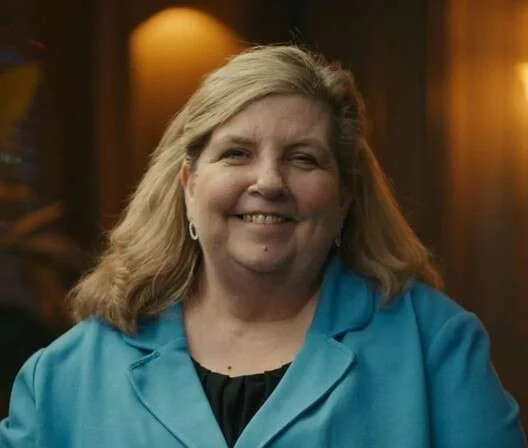
Watch This Lesson
Step into any bank branch, brokerage office, or insurance agency and you will meet an array of acronyms deciding what happens to your money when you die. You may be asked to name a beneficiary, select a POD payee, or establish a TOD transfer. To most people this looks like legal hair-splitting — isn’t the end goal the same?
Broadly, yes. Each is a mechanism to transfer wealth directly to a chosen recipient, bypassing probate. But different institutions and asset classes use different legal structures, and using the wrong one, or misunderstanding how it operates, can leave your heirs with frozen accounts, disputes, and accidental disinheritance.
Sometimes it’s literally called beneficiary. It means who gets my asset when I’m gone. Sometimes it’s called POD. It stands for payable on death. Sometimes it’s called TOD, transfer on death… At the end of the day, it all means who gets my stuff when I’m gone. But who uses which designation?
Renee Parris, Estate Planning, Simplified
Which Accounts Use Which
Life insurance and retirement accounts use a standard beneficiary designation. On 401(k)s, 403(b)s, TSPs, IRAs and traditional life policies, you name a primary and a contingent beneficiary.
Brokerage and investment accounts use Transfer on Death. The beneficiary can liquidate the account or simply retitle it into their own name and keep the same firm managing the money.
Brokerage accounts typically will use transfer on death… So yes, they can liquidate it and get the money out, or they can just change the title on it and transfer that account to their name, but still have that same investment firm manage the money.
Renee Parris, Estate Planning, Simplified
Bank accounts — checking, savings, money market — use Payable on Death. The named person has no rights to the money while you are alive, but can claim the funds immediately once you are gone.
Banks and credit unions will typically call it payable on death, POD. It means who can walk in with your death certificate, show that they have your death certificate, and they walk out with the money.
Renee Parris, Estate Planning, Simplified
The Liquidity Trap
Here is the dangerous gap. Retirement custodians and insurers force you to name a beneficiary when you open the account. Banks and credit unions usually do not ask. Unless you specifically request a POD designation on your checking and savings, those accounts default to your estate.
An account that defaults to the estate is frozen at death. Your family cannot touch a dollar of it to pay for the funeral, cover the mortgage, or handle final expenses. The money has to come through probate, which can take many months. And banks have little incentive to hurry:
Banks and credit unions don’t like to let go of money because their deposits at the end of the day is their value, and that’s how they leverage their ability to lend money… So you have to initiate it.
Renee Parris, Estate Planning, Simplified
We’re dealing with a client right now. The mom died. She’s been gone 10 months. In all of her bank accounts together, combined, $2,800. Not a lot of money. 10 months later, the daughter still doesn’t have the money… But had mom named the daughter as POD, then she would have walked in with the death certificate, shown that she was the right person, and walked out with the money.
Renee Parris, Estate Planning, Simplified
The Collateral Damage of Uncoordinated Designations
These are effective tools, but they are sharp ones. Because they operate by contract, they completely bypass whatever your will says. If your will splits everything equally among three children, but your main checking account names only your eldest daughter as POD, she receives all of those funds — and has no legal obligation to share. That mismatch is one of the most common causes of accidental disinheritance and lasting family rifts.
Two further points are worth knowing. POD and TOD accounts bypass probate but are not immune to the estate’s liabilities — where the probate estate cannot cover funeral costs, administration, taxes and creditor claims, non-probate recipients can be required to return a portion. And POD designations interact with FDIC coverage limits, so accounts with several named beneficiaries need structuring with those thresholds in mind.
Coordination Is the Whole Point
POD, TOD and beneficiary designations are not a standalone estate plan. They are components that have to be coordinated with the rest of your strategy. Letting bank accounts default to your estate ties up the liquidity your family needs most; adding uncoordinated designations can quietly dismantle a carefully built distribution plan. Reviewing them together, with a professional, is what keeps the two aligned.
About the instructor: Renee Parris is an estate planning educator with over 30 years of experience. This article is a companion piece to Renee’s course, Estate Planning, Simplified.
Sources
- Renee Parris, Estate Planning, Simplified, Module 3, Lesson 3 — course transcript.
- Uniform TOD Security Registration Act — transfer-on-death registration for securities accounts.
- Uniform Probate Code — liability of non-probate transferees where the estate is insufficient to meet claims.
- 12 CFR Part 330 — FDIC deposit insurance treatment of revocable trust and payable-on-death accounts.
This article is for educational purposes only and does not constitute legal, tax, or financial advice. Consult a qualified estate planning attorney or licensed professional in your jurisdiction to understand the specific asset-transfer laws, banking regulations, and tax implications in your state.