Watch This Lesson
There is a silent truth that every adult must eventually confront: you will participate in an estate plan. Whether you spend hours with an attorney mapping out your wishes or ignore the topic entirely, a plan will be executed. The only question is whether you will be the one writing the instructions, or whether you will let the state write them for you.
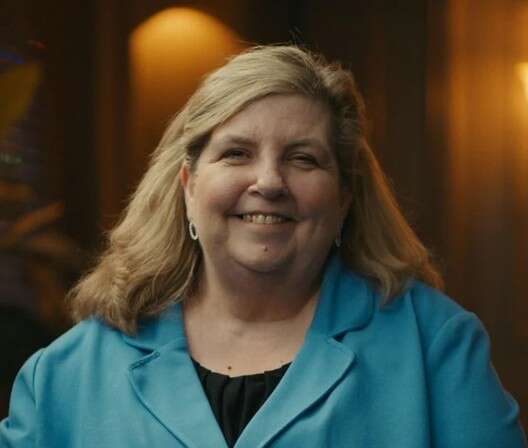
Estate planning educator Renee Parris brings more than thirty years of direct experience to the fundamental question: why does estate planning matter? Her answer is unsentimental. Estate planning is not a dry legal exercise — it is an assertion of control over your life, your care, and your legacy.
The Default Plan of the State
One of the most persistent myths about estate planning is that if you do not write a will or a trust, your estate simply stays in limbo. In reality, the legal system has a pre-existing blueprint ready to deploy the moment you pass away.
If you don’t make a plan, there is a judge appointed in every county in our country to ensure that the transfer of assets happens smoothly. Because when somebody passes away legally, all of that stuff has to go somewhere. So there is an estate plan that’s going to happen with or without your involvement.
Renee Parris, Estate Planning, Simplified
The state’s default plan is governed by intestate succession laws, which rely on rigid statutory formulas to determine who inherits your property. This default process is entirely impersonal. It does not account for your verbal promises, your family dynamics, or the special needs of your heirs. It simply traces a government-defined family tree. Where no valid next of kin can be located, assets can ultimately pass to a state’s unclaimed property fund — pools that collectively hold very substantial sums nationwide.
The Hinge Is Control: Wills vs. Trusts
The reason you would want to do it is because you get control. You get to say. You get to help the judge know what you want to have done with your assets if you use a will. If you use a trust, which is just a different transfer document, you go ahead and get 100% control. Not only of who gets what, but how and when they get it.
Renee Parris, Estate Planning, Simplified
While a will serves as a set of instructions guiding a probate judge, a properly funded trust bypasses the public probate process. It allows you to place conditions on distributions — staggering inheritances for young heirs, protecting assets from an heir’s creditors, or ensuring a spouse is cared for while preserving the principal for your children. It is the difference between letting a court interpret your wishes and setting the terms yourself, privately.
The Voice of Incapacity: Living Documents
Estate planning is not just about what happens after your death; it is equally about protecting you while you are alive. Parris puts the likelihood of experiencing some period of incapacity at roughly two-thirds of people — a professional estimate drawn from three decades of practice rather than a published actuarial figure, and worth treating as such.
Incapacity can arrive suddenly through an accident, or gradually through cognitive decline. When you cannot make your own medical or financial decisions, someone has to.
If you are incapacitated, if that happens to you, who would be your voice when you don’t have a voice? Who can sign your name when you can’t do it for yourself? We call those people power of attorneys. We call those documents living documents. You’re alive, but you’re incapacitated.
Renee Parris, Estate Planning, Simplified
A comprehensive plan establishes two separate authorizations: a financial power of attorney and a healthcare power of attorney. These can be held by the same person or divided between different people based on their strengths. You can also specify the type of authority — general authority that is active immediately, or durable or springing authority triggered only on a formal medical determination of incapacity.
Without these documents in place, a court will appoint a decision-maker for you, typically working through a default sequence beginning with a spouse, then adult children, parents, and siblings. As Parris puts it: “Maybe that’s the right person and maybe it’s not. We’ve seen it work well when it’s the next of kin. We’ve seen it be a disaster. It’s far better for you to control who that decision maker is than for the government to.”
End-of-Life Decisions: Removing the Bedside Burden
Beyond incapacity lies the harder territory of end-of-life care — the moments when recovery is no longer possible. Whether you want to be resuscitated, whether you want pain medication to keep you comfortable, whether you want artificial food and fluids if your body is already shutting down: these are questions someone will have to answer.
An advance directive, often called a living will, allows you to document these choices in writing. In doing so you are not only exercising control; you are sparing your family an impossible task.
If you’ve ever been in that position where you’ve stood around a bedside on behalf of a family member or friend and tried to decide in the midst of emotion what that person would or would not have wanted, that’s very tough. So if you take those decisions off of the family member, you go ahead and let them know in writing.
Renee Parris, Estate Planning, Simplified
A Plan That Keeps Up With Your Life
A proper estate plan is not a static milestone you complete once and never revisit. Marriage, divorce, births, deaths, changes in tax law, and moving to a new state are all triggers for a review. By understanding the three core pillars — living documents, end-of-life documents, and transfer-after-death documents — you can keep your plan aligned with the life you are actually living.
About the instructor: Renee Parris is an estate planning educator with over 30 years of experience. This article is a companion piece to Renee’s course, Estate Planning, Simplified.
Sources
- Uniform Probate Code, Article II, Parts 1 and 2 — state intestate succession default rules.
- National Association of Unclaimed Property Administrators (NAUPA) — state unclaimed property funds.
- Incapacity likelihood is cited by Renee Parris as a professional estimate from her own practice and has not been independently verified against a primary actuarial or government source.
This article is for educational purposes only and does not constitute legal, tax, or financial advice. Estate planning is complex and state-specific; always consult a licensed estate planning attorney in your jurisdiction to design a plan that matches your specific circumstances.